

How Many Watts Does a 12V Fridge Use? Energy Efficiency Tips for Campers
Short answer: a 12V compressor fridge pulls around 60 watts (about 5 amps) while the compressor is running, but it spends a good part of the day switched off. Averaged over 24 hours, the makers in this guide that publish a daily average (EvaKool and Dometic) put their fridges between 1.0 and 2.4 amps, or roughly 12 to 29 watts. That works out at about 24 to 58 amp-hours (Ah) a day, which is the number you size your battery and solar against.
- Watts = volts x amps. Ah a day = average amps x 24. Wh a day = Ah x 12.
- Freezing costs more than chilling. EvaKool's 40L drawer fridge doubles from 1.2 A to 2.4 A when you drop it from 2°C to -16°C.
- A 100 Ah lithium battery runs a fridge using 45 Ah a day for a bit over two days with no charging.
Figures checked against manufacturer specifications on 13 October 2026.
Nothing ends a good trip faster than warm drinks and a flat second battery. The fix is not complicated, but it does mean knowing which number on the spec sheet actually matters. (Still deciding whether you need one at all? Start with is a 12V camping fridge worth it.) This guide walks through the maths, lines up what EvaKool, San Hima, Dometic and Engel publish, and finishes with the setup and daily habits that keep your fridge from chewing through your power.
In this guide
- How many watts does a 12V fridge use?
- What do the fridge makers publish?
- How big a battery do you need?
- What size solar panel runs a 12V fridge?
- What makes a fridge use more power?
- How should you set up your fridge?
- Daily habits that save power
- Why won't my fridge run off the Anderson plug?
- FAQ
How many watts does a 12V fridge use?
Think of your fridge as a marathon runner, not a sprinter. The compressor runs until the cabinet hits its set temperature, switches off, and starts again once things warm up. That cycling is why three different numbers get thrown around, and why mixing them up wrecks most battery calculations.
- Running draw is the current while the compressor is on. Redarc puts a typical 60 litre camping fridge at about 5 amps while running, which is about 60 W at 12 V. VanSage gives the same ballpark for a 60 W fridge, and Battery Equivalents puts most 12V fridges at 40 to 100 W.
- Average draw is that running draw spread across the on and off periods. This is the figure most makers publish, often written as "A/hr". Redarc's worked example turns 5 A running into an average of about 2 A.
- Daily use is average amps x 24 hours, in amp-hours. Multiply by 12 for watt-hours. Redarc's 2 A average comes out at around 48 Ah a day, and VanSage puts typical 12V fridge use at 30 to 55 Ah a day.
So "how many watts" has two honest answers: around 60 W while the compressor runs, and 12 to 29 W averaged across a day for the fridges below that have a published 24 hour average. If a spec sheet says "A/hr", read it as average amps and multiply by 24.

★★★★★
"Pulls around 4 to 5 amps with the freezer at -15 and fridge at -1."
Mark H. · EvaKool TravelMate 96L dual zone · October 2019
What do the fridge makers publish?
Every maker tests differently, which makes side-by-side comparisons trickier than they look. Some give a 24 hour average at a stated ambient temperature, some give a daily energy figure, and some only give the range the compressor draws while running. The table quotes each maker's own wording and test conditions, then converts to amp-hours a day where the figure allows it.
| Fridge | Maker's figure (as worded) | What it measures | Test conditions stated | About Ah a day |
|---|---|---|---|---|
| EvaKool 65L Down Under Series II | 1.9 A/hr | 24 hour average | 32°C ambient, one zone at 2°C, one at -16°C | 46 |
| EvaKool 80L Down Under Series II | 2.0 A/hr | 24 hour average | As above | 48 |
| EvaKool 95L Down Under Series II | 2.2 A/hr | 24 hour average | As above | 53 |
| EvaKool 40L Drawer DC40-DRW | 1.2 A/Hr at 2°C; 2.4 A/Hr at -16°C | 24 hour average | 32°C ambient | 29 (fridge); 58 (freezer) |
| EvaKool Infinity RF 47L, 60L and 110L | 1.0 to 1.5 A/hr (both zones fridge at 5°C); 1.5 to 2.0 A/hr (fridge 5°C, freezer -16°C) | Average | Ambient not stated | 24 to 36; 36 to 48 |
| San Hima 75L and 95L dual zone | 12V Average Draw: 3A | Max Draw: 6A | Average and peak | None stated | 72 if 3 A holds over 24 hours |
| Dometic CFX3 45 | 0.49 kWh/24h | Energy over 24 hours | Labelled "DC@5/25°C" | 41 |
| Engel MT-V45 40L | Variable from 0.5 to 3.0 amps | Running draw range | None stated | Not published |
| Engel MT60-ELITE 60L | Variable from 0.5 to 3.6 amps | Running draw range | None stated | Not published |
How to read it. Ah a day = average amps x 24, rounded. Dometic's figure is 490 Wh divided by 12 V. San Hima's average has no test condition, so treat it as a rough guide until you've measured your own. Engel's ranges describe the compressor's variable running draw rather than a daily average, so they can't be converted. The EvaKool Down Under figures hold one zone at freezing temperatures, so a fridge-only setup should use less.
Weighing up sizes and features as well as power? Our guide to the best 12 volt fridge freezer options for long off-road trips covers what to look for.

Dual zone, 1.9 A average at 32°C
EvaKool 65L Down Under Series II Dual Zone Fridge Freezer
Fridge and freezer in one, with the option to switch one side off when you don't need it to save power.
$1,259 Shop the EvaKool 65L →

Dual zone, 75 litres
San Hima 75L Dual Zone Portable Camping Fridge Freezer
A big dual zone fridge freezer for longer trips and bigger crews, at a sharp price.
How big a battery do you need for a 12V fridge?
Start with daily use, then work out how many days you want to go without charging. The table shows days of runtime with the fridge as the only load and nothing topping the battery up. For reference, 30 Ah a day is close to the DC40-DRW as a fridge, 45 Ah is the 65L Down Under Series II, and 60 Ah is the DC40-DRW as a freezer.
| Battery | Usable Ah | 30 Ah a day | 45 Ah a day | 60 Ah a day |
|---|---|---|---|---|
| 100 Ah lithium | 100 | 3.3 days | 2.2 days | 1.7 days |
| 120 Ah lithium | 120 | 4.0 days | 2.7 days | 2.0 days |
| 200 Ah lithium | 200 | 6.7 days | 4.4 days | 3.3 days |
| 100 Ah AGM | 50 | 1.7 days | 1.1 days | 0.8 days |
The usable column follows Redarc's guide to lithium batteries: the full capacity of a quality lithium battery can be used, while AGM and lead acid batteries shouldn't go past 50%. That's why 100 Ah of AGM only counts as 50. Treat the table as best case. Lights, phones and the rest of camp share the same battery, and your fridge's low-voltage cut-out will switch it off before the battery is truly flat.
Plan it the same way you plan your water (see how long do water tanks last): work out daily use, then decide how many days you need between top-ups. To size a battery yourself, multiply daily Ah by the days you want, then divide by the usable fraction. Two days of a 65L Down Under Series II is 45.6 x 2 = 91 Ah of lithium, or 91 / 0.5 = 182 Ah of AGM, before anything else is plugged in.
What size solar panel runs a 12V fridge?
Redarc's solar sizing method is simple: divide your daily watt-hours by the hours of good sun, then add at least 20% as a buffer. Using Redarc's winter example of 6 hours of optimal sunlight:
- EvaKool 65L Down Under Series II: 45.6 Ah x 12 = 547 Wh a day. 547 / 6 = 91 W, plus 20% = about 110 W of panel.
- Dometic CFX3 45: 490 Wh a day. 490 / 6 = 82 W, plus 20% = about 98 W of panel.
That covers the fridge only, so add anything else you run and round up to the next panel size you can buy. Redarc says a 120 W panel is a great starting point for a fridge, and that a 150 W panel paired with an in-vehicle charger will run a modern 60 litre fridge around the clock in suitable weather.
What about an inverter? You can run a 12V fridge through one, but you lose power in the conversion. Victron's 12V Phoenix inverters list 87 to 92% maximum efficiency plus 4.2 to 12 W just to stay switched on. At 90%, a 547 Wh fridge day becomes about 608 Wh from the battery. Plug straight into 12V through the Anderson plug wherever you can.
What makes a 12V fridge use more power?
Ambient temperature is the big one. Makers rate their fridges at a stated ambient temperature, and every degree above it means longer compressor runs. Direct sun on the cabinet and poor airflow around the vents make it worse, which is why the same fridge can behave very differently on a mild coastal weekend and a 40°C day in the Simpson.
The set temperature is the other big lever. EvaKool's DC40-DRW is the clearest example: same fridge, same 32°C ambient, and the average draw doubles from 1.2 A to 2.4 A when you go from fridge to freezer. If you're running a dual zone and don't need the freezer side, switching it off is an easy win.
★★★★★
"being able to shut off one [half] of the cooler when not needed saves a lot on power being used from my solar battery setup"
K. H. · EvaKool 80L Down Under Series II · March 2026
Then there's how you use it. These are the habits that make the compressor work harder:
| Factor | Why it costs power | What to do |
|---|---|---|
| Frequent lid opening | Cold air spills out and warm air replaces it | Plan access times and organise contents so you can grab and go |
| Loading warm items | The fridge has to pull all that heat out before it can cycle off | Pre-chill food and drinks before they go in |
| Overpacking | Blocked airflow inside the cabinet means uneven cooling | Leave room for air to move around the contents |
| Temperature set too low | Colder settings mean longer compressor runs | Set it for what's inside, not as cold as it will go |
Insulation matters too, and it's one of the things that separates a good fridge from a cheap one.
★★★★★
"The insulation on this fridge is superb... Cycled heaps less compared to the cheap $450 fridge sitting next to it."
Daniel A. · EvaKool 60L Infinity · March 2024
How should you set up your fridge for the best efficiency?
Most of the efficiency gains happen before you leave the driveway. Get the install right once and you'll feel it every trip.
| Area | Recommendation | Benefit |
|---|---|---|
| Ventilation | Keep the vents clear. EvaKool's Down Under Series II manual asks for at least 200 mm around them, so check your own fridge's manual | Lets the compressor shed heat and cycle off sooner |
| Location | Shaded, out of direct sun and away from heat sources | Less heat for the fridge to fight |
| Mounting | Tied down on a flat, stable surface or fridge slide | Stops the fridge shifting and stressing the plug and lead |
| Wiring | Use the power cable supplied with the fridge, or heavy enough cable for the run | Avoids voltage drop that can trip the low-voltage cut-out |
| Insulation | A quality insulated cover in hot conditions | Helps hold temperature when the sun is on the cabinet |
Browse the fridge and cooler accessories range for covers, slides and power leads.
Daily habits that save power
Before you leave
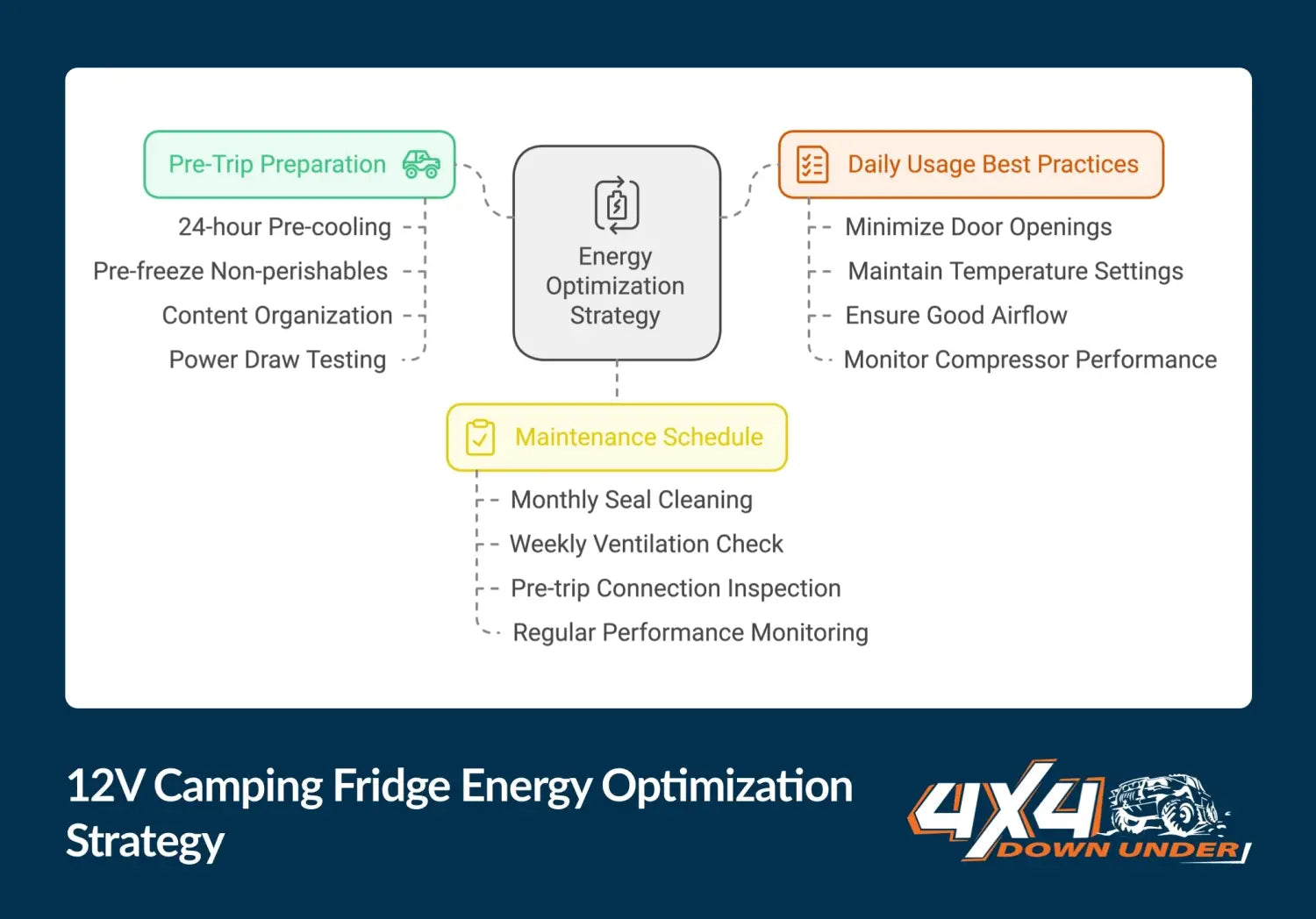
- Pre-chill the fridge on 240 V the night before. EvaKool's manual recommends it to save battery power.
- Freeze some of your food and water to act as ice blocks.
- Pack in the order you'll use things, so you're not digging around with the lid open. Our ultimate what to pack for camping guide helps with the rest of the load.
- Run the fridge on 12V before the trip to check it starts and cools from your vehicle's supply.
Temperature management
- Set the temperature for what's inside, not as cold as it will go.
- Switch off the second zone of a dual zone when you don't need it.
- Use Eco mode in mild weather if your fridge has one. EvaKool recommends Eco below 30°C and Max above.
Access planning
- Plan meals so you can get everything out in one go.
- Know where things are before you open the lid.
Content organisation
- Keep the things you grab most often near the top.
- Use zones or baskets for different types of food.
- Leave gaps for air to circulate.
Maintenance checklist
- Clean the lid seals monthly so they close properly.
- Check the ventilation paths weekly while you're on the road, especially after dusty tracks.
- Inspect plugs, leads and connections before every trip.
- Keep an eye on how long the compressor runs. If your battery suddenly drains faster than usual, get the fridge looked at. A sudden change can be a fault rather than the weather.
For the serious tourers
- Fit a battery monitor so you know your real daily use instead of guessing.
- Run a dual battery system so the fridge never touches your starter battery.
- Add solar for longer trips, sized with the maths above.
- Use reflective shields or a cover when the fridge has to sit in the sun.
Heading somewhere remote enough to need all that? Make sure the recovery kit is sorted too, with our list of essential winch accessories for serious off-roaders.
Why won't my fridge run off the Anderson plug?
This is one of the most common fridge questions we get, and it's usually the power supply rather than the fridge. Work through these:
- The plug isn't actually live. This is common with factory-fitted plugs.
- A blown fuse or tripped breaker in the plug's wiring.
- Reversed polarity.
- Low voltage from a tired battery, or voltage drop through thin wiring. EvaKool's manual notes that voltage should be measured under load to get an accurate reading.
- Loose pins or a worn plug. Cigarette sockets are prone to this too: one owner found "the cigarette connection is finicky" and kept coming out to the ute in the morning to find the fridge off (Steve A., EvaKool power lead, February 2020).
- Mismatched Anderson plugs. Plugs with different coloured housings are not cross-compatible.
To narrow it down, run the fridge on 240 V with its adaptor, then on a different 12V source. If it runs on both, the problem is in the vehicle wiring. If you only use your fridge a few times a year, switch it off between trips, clean and dry it, store it with the lid slightly open to keep mould away, and give it a 10 to 15 minute test run before the next trip.
Frequently asked questions
How many amps does a 12V fridge draw?
While the compressor runs, around 5 amps for a typical 60 litre fridge, according to Redarc. Averaged over 24 hours, the EvaKool and Dometic figures in this guide run from 1.0 to 2.4 amps, depending on the model and settings. Size your battery from the average, not the running draw.
How many watts does a 12V fridge use per day?
Multiply average amps by 24 for amp-hours, then by 12 for watt-hours. The EvaKool and Dometic averages in this guide, 1.0 to 2.4 amps, work out at about 24 to 58 Ah, or roughly 290 to 690 Wh a day. Dometic rates its CFX3 45 at 0.49 kWh, or 490 Wh, over 24 hours.
How long will a 100Ah lithium battery run a fridge?
About 3.3 days at 30 Ah a day, 2.2 days at 45 Ah a day and 1.7 days at 60 Ah a day, with no charging and nothing else running. That uses Redarc's guidance that a quality lithium battery's full capacity can be used. Other loads and the fridge's low-voltage cut-out shorten those times.
What size solar panel do I need for a 12V fridge?
Divide daily watt-hours by the hours of good sun, then add at least 20%. With 6 hours of sun, a fridge using 547 Wh a day needs about 110 W of panel. Redarc says a 150 W panel with an in-vehicle charger will run a modern 60 litre fridge around the clock in suitable weather.
Does a dual zone fridge use more power?
Running one side as a freezer uses more power than running the whole fridge as a fridge. EvaKool's Infinity RF figures go from 1.0 to 1.5 A with both zones as a fridge to 1.5 to 2.0 A with one zone freezing. Switching off the side you don't need saves power.
Find a fridge that suits your setup
EvaKool and San Hima fridge freezers, from 40 litre drawer fridges to 95 litre dual zones.
Shop fridge freezers →Planning to cook off the same battery? Read our guide to camping with an induction cooktop.
Customer quotes are verbatim from Judge.me reviews on 4x4downunder.com.au. Maker figures are taken from each maker's own specifications.
By The 4x4 Down Under Team.
About us: 4x4 Down Under is an Australian online retailer of 4x4, recovery and camping gear, based on the Sunshine Coast, Queensland.
Camping Fridges & Freezers

EvaKool 40L 4x4 Drawer Fridge/Freezer | DC40-DRW
EvaKool
Original price
$1,199.00
-
Original price
$1,199.00
Original price
$1,199.00
$1,199.00
-
$1,199.00
Current price
$1,199.00
40 Litre 4x4 Camping Fridge Freezer Drawer | DC40-DRW-AU This 40 litre 4x4 or camper draw fridge is one of the few 12/24v fridge drawers on the ma...
View Full Details
Original price
$1,199.00
-
Original price
$1,199.00
Original price
$1,199.00
$1,199.00
-
$1,199.00
Current price
$1,199.00
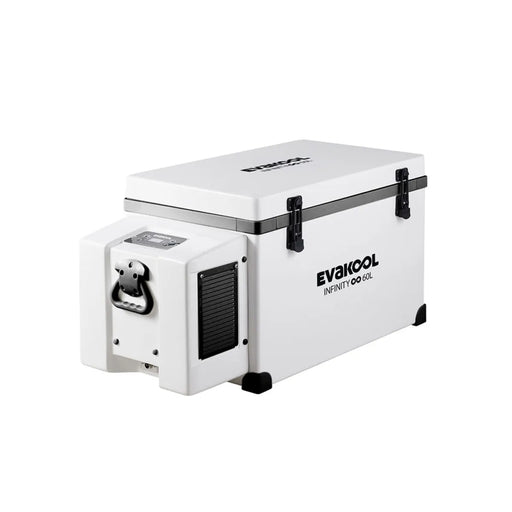
EvaKool 60L Fibreglass Infinity Camping Fridge/Freezer | RFE60-FF
EvaKool
Original price
$1,599.00
Original price
$1,599.00
-
Original price
$1,599.00
Original price
$1,599.00
Current price
$1,449.00
$1,449.00
-
$1,449.00
Current price
$1,449.00
60 Litre Dual Zone Fibreglass Infinity Camping Fridge/Freezer By Evakool Whether you're a 4x4 enthusiast, a camper, tradie, truckie or anything in...
View Full Details
Original price
$1,599.00
Original price
$1,599.00
-
Original price
$1,599.00
Original price
$1,599.00
Current price
$1,449.00
$1,449.00
-
$1,449.00
Current price
$1,449.00
Sold out

EvaKool 65L Down Under Series II Dual Zone Fridge Freezer
EvaKool
Original price
$1,399.00
Original price
$1,399.00
-
Original price
$1,399.00
Original price
$1,399.00
Current price
$1,259.00
$1,259.00
-
$1,259.00
Current price
$1,259.00
Introducing the 65 Litre Down Under Series II Dual Zone Fridge Freezer from EvaKool We’re very proud to introduce the most advanced fridge freezer...
View Full Details
Original price
$1,399.00
Original price
$1,399.00
-
Original price
$1,399.00
Original price
$1,399.00
Current price
$1,259.00
$1,259.00
-
$1,259.00
Current price
$1,259.00
Save $140.00

EvaKool 95L Down Under Series II Dual Zone Fridge Freezer
EvaKool
Original price
$1,799.00
Original price
$1,799.00
-
Original price
$1,799.00
Original price
$1,799.00
Current price
$1,689.00
$1,689.00
-
$1,689.00
Current price
$1,689.00
Introducing the New 95 Litre Down Under Series II Dual Zone Fridge Freezer from EvaKool We’re so excited to introduce to you the latest fridge fre...
View Full Details
Original price
$1,799.00
Original price
$1,799.00
-
Original price
$1,799.00
Original price
$1,799.00
Current price
$1,689.00
$1,689.00
-
$1,689.00
Current price
$1,689.00
Save $110.00
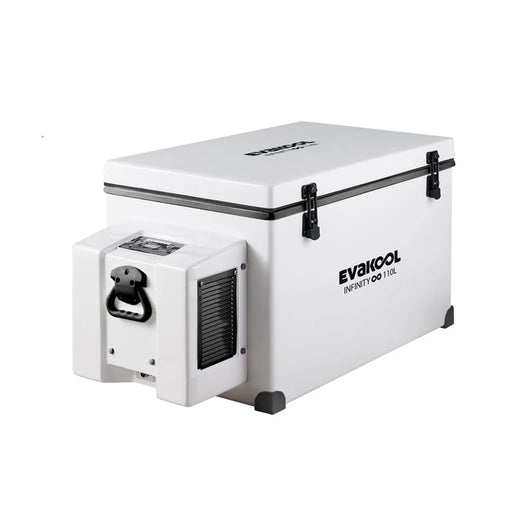
EvaKool 110L Fibreglass Infinity Camping Fridge/Freezer | RFB110-FF
EvaKool
Original price
$2,399.00
-
Original price
$2,899.00
Original price
$2,399.00
-
Original price
$2,899.00
Original price
$2,399.00
$2,199.00
-
$2,699.00
$2,199.00
-
$2,699.00
Current price
$2,199.00
110 Litre Fibreglass Infinity Fridge/Freezer by Evakool | RFB110-FF Designed with long trips and big families in mind, this 110 litre dual zone In...
View Full Details
Original price
$2,399.00
-
Original price
$2,899.00
Original price
$2,399.00
-
Original price
$2,899.00
Original price
$2,399.00
$2,199.00
-
$2,699.00
$2,199.00
-
$2,699.00
Current price
$2,199.00
Sold out