
NEED HELP?
Reach us here or email info@4x4downunder.com.au

We've all been there – standing in the garage, scratching our heads, wondering if we've packed everything needed for that weekend adventure. With the off-road vehicle market hitting USD 10.80 billion in 2023, there are more outdoor explorers than ever are hitting the tracks. But here's the thing – having the right gear isn't just about convenience; it's about turning those potentially sticky situations into memorable stories rather than misadventures.
Whether you're planning to tackle the red dirt tracks of the Kimberley or navigate the muddy trails of Tasmania, we've got your back. Our team has spent countless hours testing and refining this ultimate gear checklist, making sure you've got everything needed for a safe and enjoyable off-road adventure. From essential recovery equipment to creature comforts that make camp life better, we'll walk you through everything you need.
Ready to ensure you're properly equipped for your next off-road adventure? Let's dive into the essential gear that every weekend warrior needs in their arsenal.
With over 57% of people now participating in outdoor activities, we're seeing more 4x4s hitting the tracks than ever before. But here's something we've learned from years of experience: your adventure is only as good as your recovery gear. When you're bogged down in the Victorian High Country or facing a challenging section in the Simpson Desert, having the right recovery equipment isn't just convenient – it's essential.
First up, let's talk about the backbone of any serious off-road setup. A reliable recovery winch tops our list of must-haves. When choosing a winch, make sure it's rated for at least 1.5 times your vehicle's gross weight. For most 4x4s, this means a minimum 9,000-pound capacity winch with synthetic rope for safer recovery operations.
If you're unsure how to choose the best winch for your vehicle, check out our article here where we dive deep into finding the right winch for your specific vehicle and needs.
Your essential recovery kit should include:
We can't stress this enough – safety gear isn't just about ticking boxes; it's about making sure you return home with nothing but great stories to tell. A comprehensive first aid kit should be your starting point, but there's more to consider for true peace of mind in the bush.
Essential safety equipment includes:
One often-overlooked aspect of safety gear is proper storage. We recommend keeping your recovery gear in a dedicated bag or box, easily accessible but secured against movement. Your first aid kit should always be within arm's reach – not buried under camping gear in the back. For extended trips through remote areas, consider doubling up on critical items like snatch straps and shackles. We've seen plenty of situations where having a backup made the difference between a minor delay and a major drama.
Remember, your safety equipment is only as good as your knowledge of how to use it. Before heading out, take some time to familiarise yourself with all your recovery gear. Better yet, join a local 4x4 club or take a recovery course – there's nothing like hands-on experience in a controlled environment to build confidence for when you really need these skills.
With the global off-road market set to reach USD 37.48 billion by 2034, we're seeing more sophisticated vehicles hitting the tracks. But here's something that hasn't changed: the basics of vehicle maintenance and repair. Whether you're driving a brand new 79 Series or a well-loved Patrol, having the right tools can mean the difference between a quick trackside fix and a very long walk.
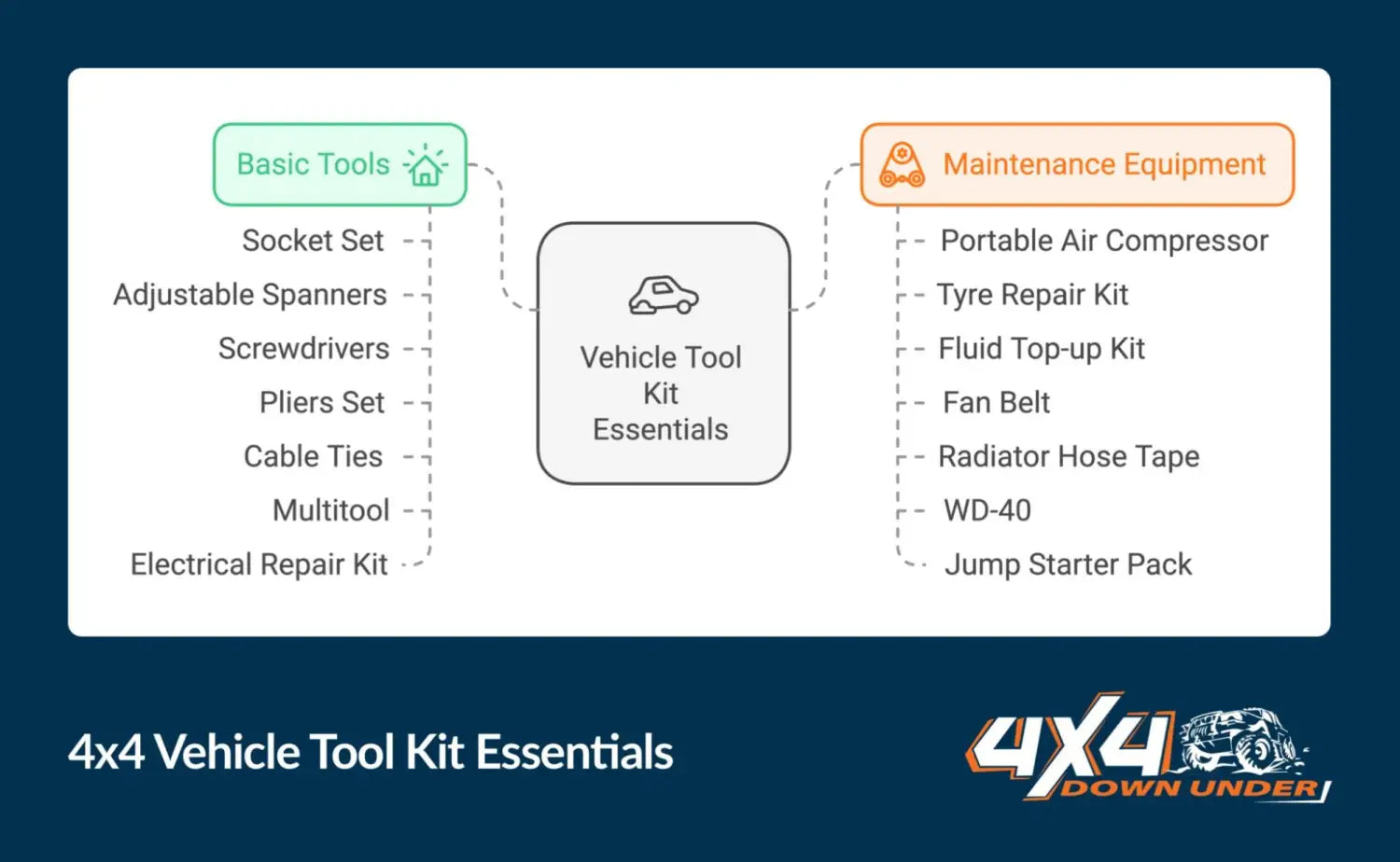
Let's start with what we consider the essential tool kit for any off-road adventure. We've learned from experience that a well-thought-out tool kit doesn't need to weigh a tonne or take up half your cargo space. Here's what we recommend packing:
Beyond basic tools, there's specific maintenance gear that's proven invaluable on countless trips. One of our most-used items is a reliable portable air compressor for tyre management. When you're transitioning between different terrains, being able to adjust your tyre pressures quickly and accurately is crucial.
Essential maintenance items include:
Here's a pro tip we've learned from years on the tracks: create a vehicle-specific toolkit based on your actual needs. Take some time to look under your bonnet and identify the most common bolt sizes. Check what's accessible and what might need special tools. For instance, if your vehicle has special security nuts on the wheels, make sure you've got the key socket packed – and a spare one wouldn't hurt either.
We also recommend keeping a small selection of spare parts that are specific to your vehicle and known weak points. This might include spare fuses, bulbs, belts, and filters. If you're heading into remote areas, consider carrying spare wheel bearings or CV joints if your vehicle is known to be particular about these. It's all about understanding your vehicle's quirks and being prepared for the most likely issues.
With the off-road vehicle market continuing to expand through 2034, we're seeing more tech-savvy adventurers hitting the tracks. But here's something we've learned the hard way: when you're deep in the Australian bush, you can't rely on just one navigation method or communication device. Let's break down what you really need to stay on track and in touch.
First up, let's talk about reliable navigation solutions. While your smartphone's GPS might work great around town, we recommend a more robust approach for serious off-road adventures. A dedicated GPS unit with topographic maps should be your primary navigation tool. These units are built tough and often come preloaded with off-road tracks and points of interest.
Your navigation kit should include:
When it comes to staying in touch beyond the black stump, we've found that layering your communication options is the way to go. A quality UHF radio should be your first investment – it's essential for convoy communication and can be a lifeline in emergency situations.
Essential communication equipment includes:
Here's a tip that's saved us more than once: create a communication plan before you head out. Know which channels the local 4x4 clubs monitor, where you might find mobile coverage, and when you should check in with your emergency contacts. In remote areas, we recommend scheduling regular check-ins with someone back home who knows your intended route and timeline.
Don't forget about power management for your devices. We always pack a portable power pack dedicated to keeping communication equipment charged. It's also worth investing in a good mounting system for your UHF radio and GPS units – you want them easily accessible but secure when the going gets rough.
With the outdoor recreation market growing steadily, we're seeing more innovative camping gear hitting the shelves. But here's what years of experience has taught us: the best camping setup isn't always about having the latest gear – it's about having the right gear for your style of adventure. Let's break down what you really need to create a comfortable camp without overloading your rig.
Your shelter system is arguably the most important part of your camping setup. Whether you're dealing with summer storms or winter winds, having a reliable place to rest is crucial. We've found that a quality 270-degree awning provides fantastic versatile coverage for any campsite setup.
Essential shelter and sleeping gear includes:
A well-organised camp kitchen makes every meal more enjoyable and efficient. We recommend setting up a dedicated kitchen box or drawer system that's always packed and ready to go. This saves time when packing and ensures you don't forget essential items.
Your camp kitchen should include:
Here's a pro tip we've learned from countless nights under the stars: invest in good storage solutions. We recommend using clear storage containers with labels – it makes finding things in the dark much easier. Also, consider how your storage systems will work in wet weather. Having a way to access your kitchen gear without exposing everything to the rain is invaluable.
When it comes to comfort items, it's all about smart choices. A good camp chair might seem like a luxury, but after a long day of four-wheel driving, you'll be glad you brought it. The same goes for proper lighting – we recommend a combination of area lighting for your campsite and personal headlamps for convenience. Remember, your camping setup should work for you in all conditions, from perfect weather to challenging situations.
With modern off-road vehicles becoming increasingly sophisticated and market projections reaching USD 6.01 billion by 2030, managing your power needs has never been more crucial. We've seen plenty of great adventures cut short by power issues, so let's make sure you're properly set up to keep everything running smoothly.
The heart of any reliable power setup is a good dual battery system. Whether you're running a fridge, charging devices, or powering camp lights, having dedicated auxiliary power is essential. We recommend starting with a quality dual battery system that includes smart charging capabilities.
Essential power equipment includes:
Modern adventures often involve a fair bit of electronics, and managing them efficiently is key. We've found that having a dedicated power distribution system helps keep everything organized and prevents overloading any single circuit.
Your electronics management should include:
Here's something we've learned from experience: create a power priority list. Know which devices are essential (like your fridge and communications equipment) and which are luxuries. We recommend setting up your system with dedicated circuits for critical items, ensuring they won't be affected if something less important draws too much power.
When it comes to solar power, we've found that a combination of fixed and portable panels works best. A fixed panel on your roof rack can maintain your batteries during the day, while a portable panel lets you take advantage of sun exposure while parked in shade. Consider a quality DC-DC charger with solar input capability – it's an investment that pays off in reliable power management.
Remember to regularly check all your connections and keep spare fuses for every circuit in your system. We also recommend carrying a basic electrical repair kit including spare wire, connectors, and a good quality multimeter. Being able to troubleshoot electrical issues in the field can save your trip from an unexpected early end.
The Aussie weather can be as diverse as our landscapes. From the scorching heat of the Simpson Desert to the wet tropics of Far North Queensland, having the right gear for your specific climate can make or break your adventure. Let's break down what you need for different conditions.
Your gear needs can change dramatically with the seasons, and we've found that versatility is key. A good starting point is a quality all-weather awning that can provide both sun protection and shelter from sudden storms.
Summer Essentials:
Winter Preparation:
Different regions of Australia present unique challenges, and we've learned to adapt our gear accordingly. Here's how we recommend preparing for specific environments:
Desert Conditions:
Tropical Requirements:
Here's another pro tip: create modular gear packages that you can swap in and out depending on your destination and the season. For instance, we keep our desert gear package separate from our wet season kit. This makes trip preparation more efficient and ensures you're not carrying unnecessary items.
When it comes to clothing and personal gear, we always recommend the layer system. Even in hot climates, temperatures can drop dramatically at night, and in wet regions, having quick-drying layers can make all the difference to comfort. Consider investing in quality wet weather gear – there's nothing worse than being stuck in the rain with gear that doesn't perform.
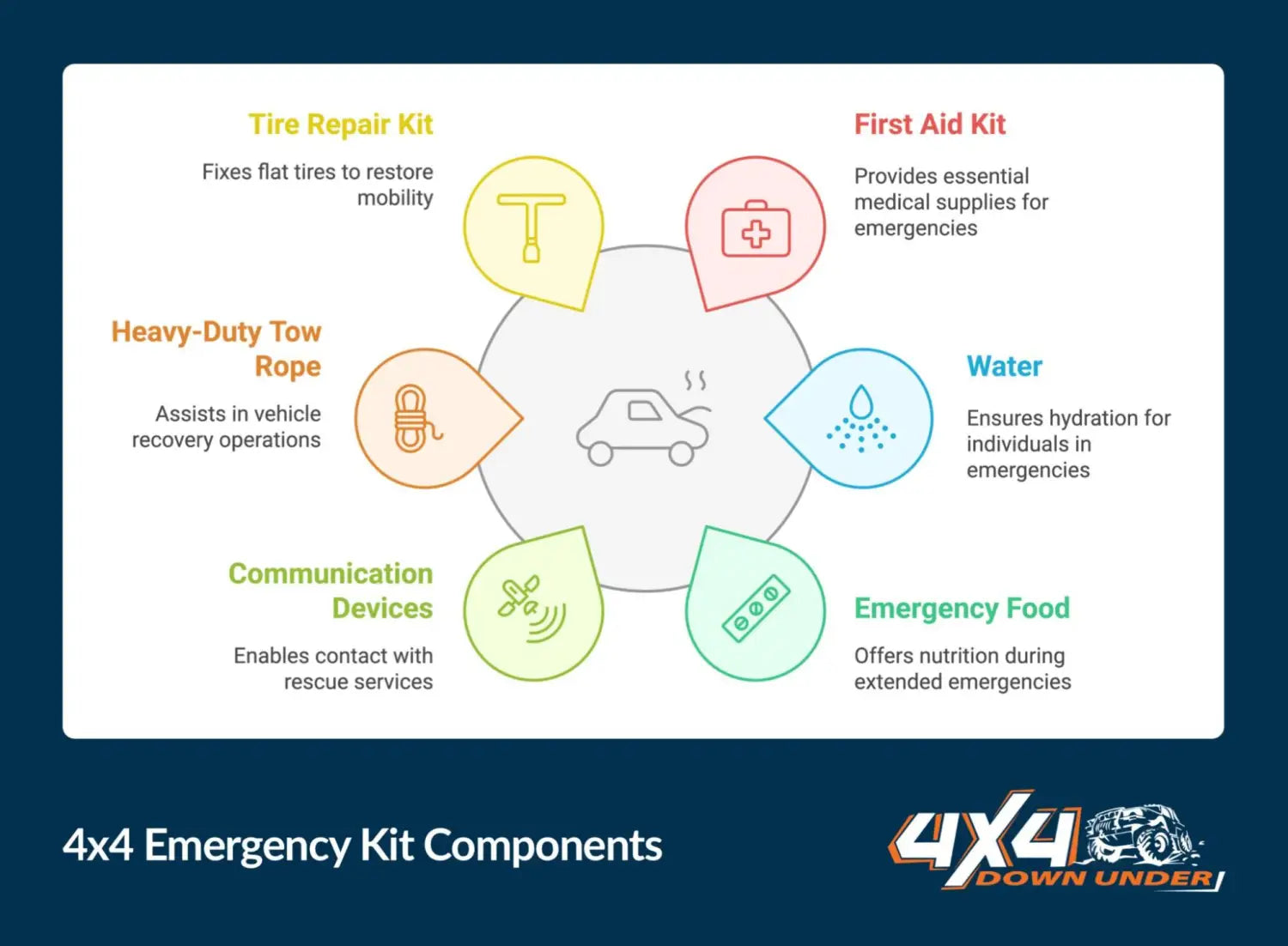
When you're deep in the Australian outback, self-sufficiency isn't just a nice-to-have, it's essential. We've seen enough situations to know that a well-prepared emergency kit can turn a potential disaster into just another story to tell around the campfire. Let's break down what you need to stay safe when things don't go according to plan.
Your emergency kit should be easily accessible and regularly checked. We recommend storing critical items in a dedicated waterproof storage box that's clearly marked and secured in your vehicle.
Essential emergency items include:
Beyond basic recovery gear, there are specific emergency items that could make the difference in a serious situation. We've found that having a backup winch controller and additional recovery points can be invaluable when standard recovery methods aren't working.
Emergency recovery equipment should include:
Here's something crucial we've learned: it's not just about having the gear – it's about knowing how to use it. We strongly recommend practicing emergency procedures before you need them. This includes knowing how to change a tire in difficult conditions, use your recovery gear safely, and perform basic vehicle repairs.
Create an emergency action plan and share it with your traveling companions. Include important contact numbers, vehicle details, and your intended route. We recommend laminating a copy and keeping it with your emergency kit. Also, make sure everyone in your group knows where emergency equipment is stored and how to use it.
Remember to check and maintain your emergency kit regularly. Items like batteries, medical supplies, and emergency food have expiry dates. We suggest doing a complete kit check before each major trip and replacing any expired or damaged items. It's also worth considering seasonal additions to your kit – extra water in summer, additional warm gear in winter.
After helping countless adventurers gear up for their off-road journeys, we've noticed some questions that come up time and time again. Let's address the most common ones to help you get started on the right track.
While it's tempting to try and save money on gear, we always say: buy once, cry once. For a basic but reliable setup including recovery gear, camping equipment, and safety essentials, we recommend budgeting between $3,000-$5,000. Remember, you can build your kit gradually, starting with the most critical safety and recovery items first.
Weight distribution is crucial for vehicle handling and safety. We recommend following these guidelines:
Regular maintenance ensures your gear is ready when you need it most. After each trip:
Building your ultimate off-road gear kit isn't just about buying equipment – it's about creating a reliable system that supports your adventures and keeps you safe in the Australian outback. Whether you're planning your first trip or upgrading your existing setup, remember that quality gear is an investment in your safety and enjoyment.
Start with the essentials we've outlined here, focusing first on safety and recovery equipment. Then gradually build your kit based on your specific needs and the type of adventures you're planning. Remember, every 4x4 journey is unique, but being properly prepared is universal.
Need help selecting specific gear for your setup? Our team at 4x4 Down Under is always here to help. We've tested these products in real Australian conditions and can help you choose the right equipment for your vehicle and adventure style. Check out our range of recovery gear, power solutions, and camping equipment, or get in touch for personalised advice.
Remember, the best adventures are the ones where you return home safely with great stories to tell. Get your gear sorted, and we'll see you out on the tracks!